
🔄Last Updated: 13 March 2026•Originally published: 4 February 2020
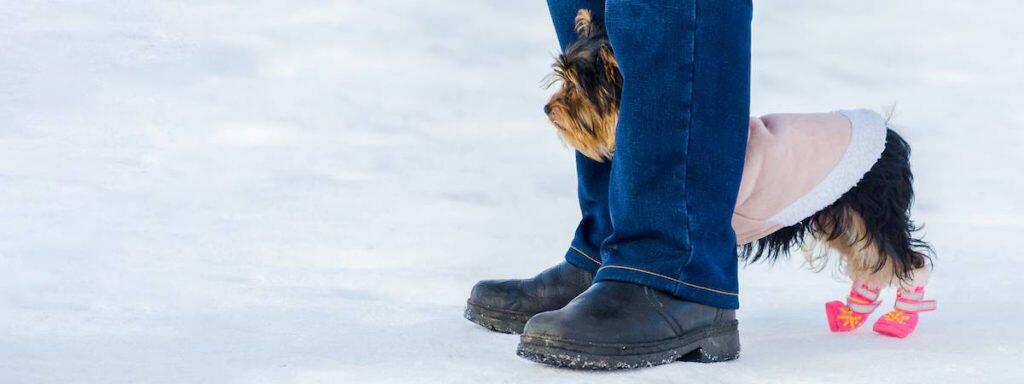
Dog boots are not a fashion accessory — they are protective equipment. In winter, road salt and de-icing chemicals cause painful chemical burns to paw pads, and the freeze-thaw cycle creates ice crystals between toes that cut into the skin. In summer, tarmac heated by the sun regularly exceeds 60°C — hot enough to cause second-degree burns on unprotected paws (the 7-second rule: if you cannot hold the back of your hand on the pavement for 7 seconds, it is too hot for your dog’s feet).
When Dogs Need Boots
- Winter: Road salt, grit, de-icing chemicals, ice, and snow. These damage paw pads and the chemicals are toxic if licked.
- Summer: Hot pavement, sand, and metal surfaces. Test with the 7-second hand test before walking.
- Paw injuries: Protecting cut, cracked, or post-surgical paws from dirt and infection during walks.
- Rough terrain: Rocky hikes, sharp ground, thorny trails. Working and hiking dogs benefit enormously.
Quick Comparison: Best Dog Boots UK 2026
| Product | Key Feature | Best For |
|---|---|---|
| Ruffwear Polar Trex | Vibram Icetrek sole / Insulated | Winter / Snow / Premium |
| Muttluks Snow Mushers | Fleece-lined / Recycled rubber sole | Cold weather / Comfort |
| QUMY Waterproof | Moulded rubber / Anti-slip | Budget / Good grip |
| Trixie Walker Active | Reflective / Paw injury recovery | UK availability / Injury protection |
Sizing & Break-In Tips
- Measure paw width (not length). Place your dog’s paw on paper, mark the widest point, and measure. Front and back paws may be different sizes — many brands sell boots in pairs for this reason.
- Break-in period: Most dogs need 3-5 short sessions to adjust to wearing boots. Start indoors, reward generously, and gradually increase duration.
- Velcro straps: Must be snug but not tight. You should be able to slide one finger between the strap and the dog’s leg.
For paw care and grooming, see our Dog Nail Clippers and Dog Coat UK guides.